Before officially joining TEAM LEWIS last year, I spent a period here as an intern.
You might hear me joke that starting an internship before graduating took away the very last bit of student life where I could enjoy doing nothing. But honestly, if anyone were to ask whether it was worth it, I’d say yes – because in many ways, TEAM LEWIS helped fill the gap left by university career education, which is probably something that’s missing in a lot of modern curricula.
Arguing who should be responsible for this transition isn’t really the point here. But among the countless enlightening moments during this internship, there were quite a few occasions when I thought “I wish I’d known this sooner.” I’m not talking about specific skills or knowledge that we’ll eventually learn as we progress, but rather gaining a real sense of what actually working in PR is like and unlearning habitual thinking I had from school that might not serve me well in my career.
While the memories are still fresh, I hope these three tips can help new joiners like me smoothly navigate the very first stage of their careers.
#1 Being Trustworthy Matters More Than Proving What You Can Do
Trust is essential to any functioning human relationship, working in a team is no exception.
However, in places like universities where showing “what you can do” is the main assessment criterion, the section on “collaboration/teamwork” usually occupies only a small portion of the marking criteria. This often leads to the assumption: If you’re competent enough on your own, then you must also be a good team player.
But is that really what makes someone trustworthy? Or more realistically, as an intern with limited experience, is there another way to build trust and show you’re a team player?
The good news is that there is a way, and there always is.
Charles H. Green’s (2000) trust equation breaks this reputational value into four variables: credibility, reliability, intimacy, and self-orientation. For anyone trying to build more trust but finding the concept too abstract, this is the simple math that makes it more doable:
Trustworthiness = (credibility + reliability + intimacy) / self-orientation
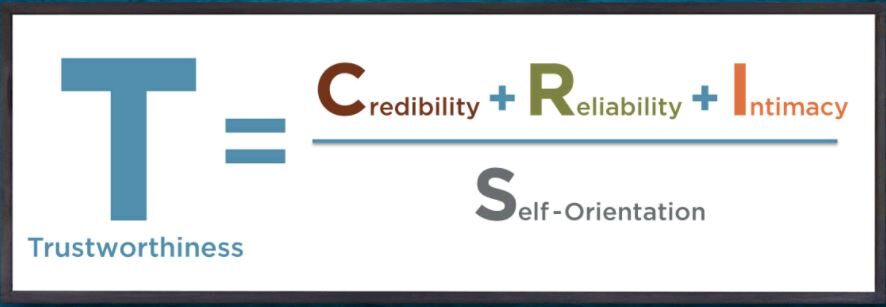
Source: The Trust Equation
- Credibility = your expertise and experience, demonstrated through the words you speak
- Reliability = your consistency in doing what you said you would
- Intimacy = the sense of safety and security others feel when entrusting you with something
- Self-orientation = how much your focus aligns with the interests of others
As an intern, don’t get caught up in proving what you can do. Start with building your reliability – complete tasks on time, don’t hide your questions, and show you’re actively working on your credibility, whether it’s through reading industry news or asking for feedback.
Related: MARKETING AGENCY SUPPORTS 2,000+ COMMUNITY CAUSES
#2 Never Stop Learning
It’s a truism, I know. If I had a dollar for every time someone offered me this advice, I’d be sipping my long black on a tropical island that I just bought. But seriously, there’s a good reason it keeps coming up and there is a huge potential in it.
Think about creativity and problem-solving skills as the workings of a kaleidoscope: innovation comes from rearranging existing elements to form new patterns. Working in PR, our ideas and ability to address issues usually originate from the knowledge and resources we have accumulate every day. Whether it’s browsing through daily news and case studies, or even just keeping up with what’s trending on TikTok, every bit of knowledge counts. It all contributes to your reservoir of insight that supports a more comprehensive understanding of your work.
#3. Over-Communicating is Better than Under-Communicating
Over-communicating isn’t about bothering your colleagues; it’s about making sure everyone on the team is clear on what’s happening and has the information they need to make decisions.
In an industry where things move fast and details matter, assuming that everyone is always on the same page can be a costly mistake. When working across several accounts with different teams, it’s easy for expectations or priorities to get lost or misunderstood. A quick message to check in can save you from bigger problems later.
Communication also helps build transparency and trust within the team (we’re back to the first tip now). People appreciate proactive updates, even when there is no significant progress. It shows that you’re on top of things and that their concerns are being handled. That culture of accountability can prevent last-minute surprises. However, it’s still necessary to make sure the communication to be clear, concise, and purposeful rather than overwhelming or excessive.
Conclusion
The transition from school to workplace is full of moments where you just have to “unlearn and relearn”. It sounds scary, but once you’ve been through it, you’ll realise it’s really nothing to stress about.
Before I started writing this, I wasn’t sure if the whole experience was actually worth putting into words and if anyone would be interested. But thinking back to day one of my PR journey at TEAM LEWIS nine months ago, I know I would have appreciated reading something like this. And honestly, that’s what this office has always tried to show – through their practices and mentorship.
If all of this still feels a bit too early for you to fully take in, just remember one thing: never hesitate to ask questions – because at TEAM LEWIS, there’s no such thing as a stupid question. (Lucky this isn’t academic paper or I’d have to cite literally everyone in the office after that line!).