Audemars Piguet has spent fifty years telling the world it answers to no one. It is privately held by the same two founding families. It has never done a diffusion line, never licensed its name, and famously pulled out of the major watch fairs rather than compete in someone else’s arena. The Royal Oak, the watch that Gerald Genta sketched on a napkin overnight in 1970, is not just a product. It is the entire argument for why AP exists.
View this post on Instagram
So, when the news broke that AP had agreed to put its name alongside Swatch’s on a collaboration watch, the most interesting question wasn’t whether collectors would approve. It was simpler and more unsettling: what exactly scared them into saying yes?
Because make no mistake, this deal is asymmetric. Swatch Group is the largest watch manufacturer on earth. A failed collaboration barely registers on its balance sheet. Yet for AP, the downside is the Royal Oak’s mystique, which is not a marketing asset but the structural foundation of the brand’s entire pricing power. You don’t gamble that lightly unless you believe the alternative is worse.
Given this, I guess what AP has concluded (and what this collaboration makes visible) is that the bigger existential risk for a luxury house in 2026 is not dilution – it’s irrelevance.
The traditional luxury playbook is built on a simple architecture: scarcity produces desire, desire produces aspiration, aspiration produces pricing power. Guard the gate hard enough and the queue grows. Hermès has run this play with extraordinary discipline for decades. It still works. Theoretically, AP could have kept running it too.
But the mathematics of aspiration are changing. The audiences who once reliably aged into luxury consumption, who admired from a distance in their twenties and arrived as buyers in their forties, are being replaced by cohorts whose relationship with brands is less patient and more promiscuous. They have grown up in a culture where access is the norm and the most powerful endorsements don’t come from heritage but from the people in their feeds. For this audience, remote aspiration is not romantic. It is just remote.
When Scarcity Stops Being Enough
Swatch understood this dynamic before anyone asked it to. The MoonSwatch was not, as it was widely described, a democratisation play. It was a controlled experiment run on Omega, a brand Swatch owns and can afford to stress-test, to answer one question: can you generate the emotional heat of scarcity without permanently surrendering access? The answer, as the queues and the TikTok threads demonstrated, was yes. Blancpain followed as the second trial, slightly more niche, refining the formula. Two experiments in, Swatch had something more valuable than a hit product. It had a replicable mechanism, and what AP is buying into is exactly that. The price of entry isn’t money. It’s the Royal Oak.
What often gets lost in the brand strategy conversation is the sophistication of the communications architecture underneath it. Swatch does not announce these collaborations so much as it orchestrates them. The reveal sequence is deliberate: cryptic visual cues released to specialist press first, seeding collector forums and horological communities before the story widens into lifestyle media and then mainstream coverage. Each audience layer discovers the news in a way calibrated to their identity. The insider feels ahead of the curve, and the casual observer feels let in on something. That sequencing is not accidental. It is earned media engineered to feel spontaneous, and it requires a precise understanding of how different publics move information and at what speed.
The management of collector backlash is equally intentional. In conventional crisis communications, backlash is a problem to be contained. Swatch treats it as a feature. The outrage from purists generates its own media cycle, signals to newer audiences that this product carries cultural weight worth arguing over, and paradoxically reinforces desirability. The brand never responds defensively. It lets the tension breathe, which is itself a communications choice, and a confident one.
The Real Strategy Behind the AP x Swatch Collaboration
For AP, managing that same dynamic while protecting relationships with its most valuable collector base will be the real communications test of this launch. The two audiences require different messages delivered through different channels with careful timing. Getting that sequencing wrong is how collaborations unravel, regardless of how strong the product is.
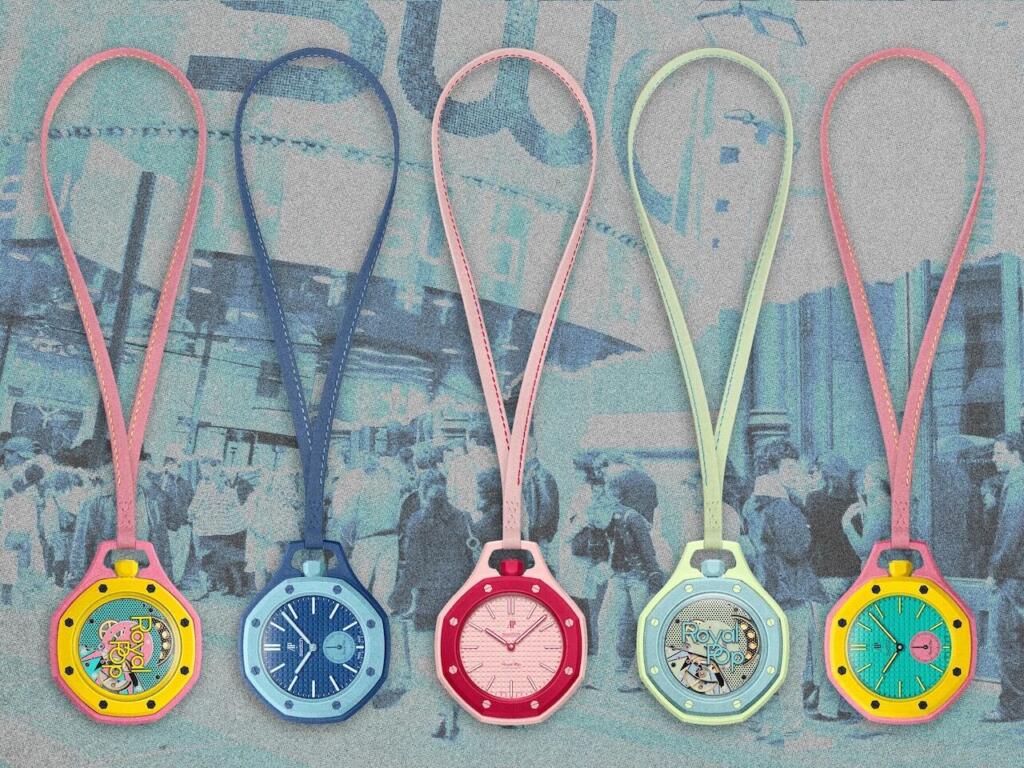
That transaction reveals something important about what brand equity actually means in this environment. The Royal Oak’s mystique is real, but it is not self-renewing. It requires an audience that knows what it means, who understands why a steel sports watch with an octagonal bezel at AP prices represents something extraordinary rather than just absurd. That audience is not infinitely self-replenishing. It has to be cultivated, and cultivation requires contact. AP has historically trusted the watch press, the collector community and the weight of its own history to do that work. The Royal Pop collaboration is a bet that those channels are no longer sufficient on their own.
Attention Is the New Luxury Currency
Whether the bet pays off depends almost entirely on framing.
View this post on Instagram
The MoonSwatch succeeded because it never pretended to be something it wasn’t. It wore its Omega references openly but was clearly a doorway, not a Speedmaster. Collectors could hold both things in their heads simultaneously. If Royal Pop reads as an extension of AP’s design language rather than a dilution of it, the mystique of the Royal Oak may actually broaden. New audiences will encounter the octagonal bezel, absorb the brand’s visual logic and cultural weight, and leave with a residue of aspiration that may, over time, convert into something more.
If it reads as heritage rented out for reach, then best believe the backlash from the collector community will be loud and the reputational cost real.
But here is the thing about that risk. The deal is done and the strategic judgment embedded in that decision is clear: in a market where attention is the scarce resource and culture moves faster than any house can curate its way through, standing completely still is no longer the safe option. It is just the slower way to become invisible.
That is the actual lesson, not that scarcity is theatre, and not that earned media is the campaign. Those are tactics. The strategic question is starker: how long can you protect the gate before the gate stops mattering?
AP has decided it can’t wait to find out.