I love Kraftwerk. Their “Radio-Aktivität” album from 1975 is one of my all-time favourites. It’s not just the music. It’s also the lyrics and the whole atmosphere.
The album speaks of the fascination, the ambiguity and the fears around radioactivity. After a long period of a strong belief in a nuclear future – see the dreams of nuclear cars -, by the mid-1970s a strong anti-nuclear movement had developed. In Germany, “Atomkraft – Nein Danke” (Nuclear power – No, thanks) was the slogan of the decade. It launched the Greens as a political movement and ultimately as a party. You can draw a direct line from then to 2011, when after Fukushima, the German government decided to shut down all nuclear power plants across the country – under a conservative (!) chancellor.
This decision today is widely seen as premature and rash. Together with the decision to stop Russian oil and gas imports it’s at the centre of Germany’s industrial decline. Today, Germany is one of the countries with the highest energy prices, and they are largely seen as the biggest problem for the German industry.
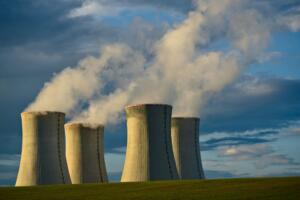
What is the cause for the third-largest economy in the world to exit nuclear energy and risk its future? The answer is: misconceptions, ideologies and emotions. Basically, the country decided to risk major economic decline because of fearing a technology that it saw as an even bigger risk. The nuclear industry had simply lost the war of words across the country.
We need energy to live and breathe. It’s why we have to eat and drink. We can’t work, communicate or travel without energy. We are surrounded by technology that needs energy. Digital data is energy. The global energy demand grew by 2.2% last year. And global energy consumption is projected to increase by up to 57% by 2050 compared to 2022 levels. This means thousands of new power plants, improvements in energy efficiency and management will be needed – and global support for new technologies from small nuclear reactors (SNRs), to wind and solar, to fusion reactors etc. The availability and affordability of energy impacts everyone on various levels. Higher energy prices even worsen inequality by disproportionately affecting low-income households, women, and people with disabilities through increased energy poverty and reduced spending on other necessities.
The big question is what’s necessary to make an economic and ecologic future a reality around energy. The answer is: better and more effective communication, education and cooperation. Between all players in the energy sector.
At TEAM LEWIS (conveniently headquartered at Electric Boulevard next to the iconic London Battersea Power Station), we are building a new hub for the future of energy.
We are working for dozens of companies in the energy space, from DNOs, energy generators, B2C companies to industry and trade associations. We help them to work with policy makers, to sell new products and services and to build our future’s infrastructure. We help them to communicate with, influence and work with politicians, consumers and other stakeholders. We provide global insights from local specialists – and help to convince local communities to support the building of local infrastructure.
Our future is energy. Meet us at our Energy Hubs around the world, join our upcoming events and contact our experts. Let’s power our future.