Crafting Clear Marketing Priorities
Clear marketing priorities are essential for targeting key areas to meet business objectives and drive revenue. However, setting priorities can be challenging due to numerous options like social marketing and email marketing, as well as balancing short-term needs with long-term growth.
In part 1 of this guide, we will help you identify, set, and manage your marketing priorities effectively.
Key Takeaways
-
Align marketing goals with business objectives. Focus on campaigns tied to your company’s vision and prioritize projects with the highest KPI impact.
-
Order of marketing channels: Start with owned media (website, email, content). Use paid ads for quick traffic, focus on social media and PR to build trust, invest in SEO for long-term growth, and explore emerging channels to innovate.
- Leverage Tools for Efficiency. Apply methods like the ABC Method and Eisenhower Matrix to prioritise high-impact tasks. Techniques like Eat the Frog and ALPEN Method ensure efficient workflows, while tools like Kanban and Pareto Principle maximise productivity.
The 5 Most Important Priorities for Marketing
Before initiating a marketing campaign, it’s crucial to establish clear priorities to ensure alignment with business objectives and maximise effectiveness. Here are 5 key marketing priorities to address:
1. Define Clear Objectives
- Identify your business objectives and align your prioritisation system to support them.
- Establish specific, measurable, achievable, relevant, and time-bound (SMART) goals to guide your campaign and assess its success.
- Establish criteria for prioritisation, such as potential ROI, urgency, impact on the audience, and alignment with overall strategy.
2. Understand Your Audience & Analyse Competitors
- Conduct thorough research to identify and understand the demographics, preferences, and behaviours of your target market, enabling tailored messaging and strategies.
- Analyse competitors’ strengths, weaknesses, opportunities, and threats (SWOT) to identify market gaps and differentiate your offerings.
3. Develop a Comprehensive Marketing Plan
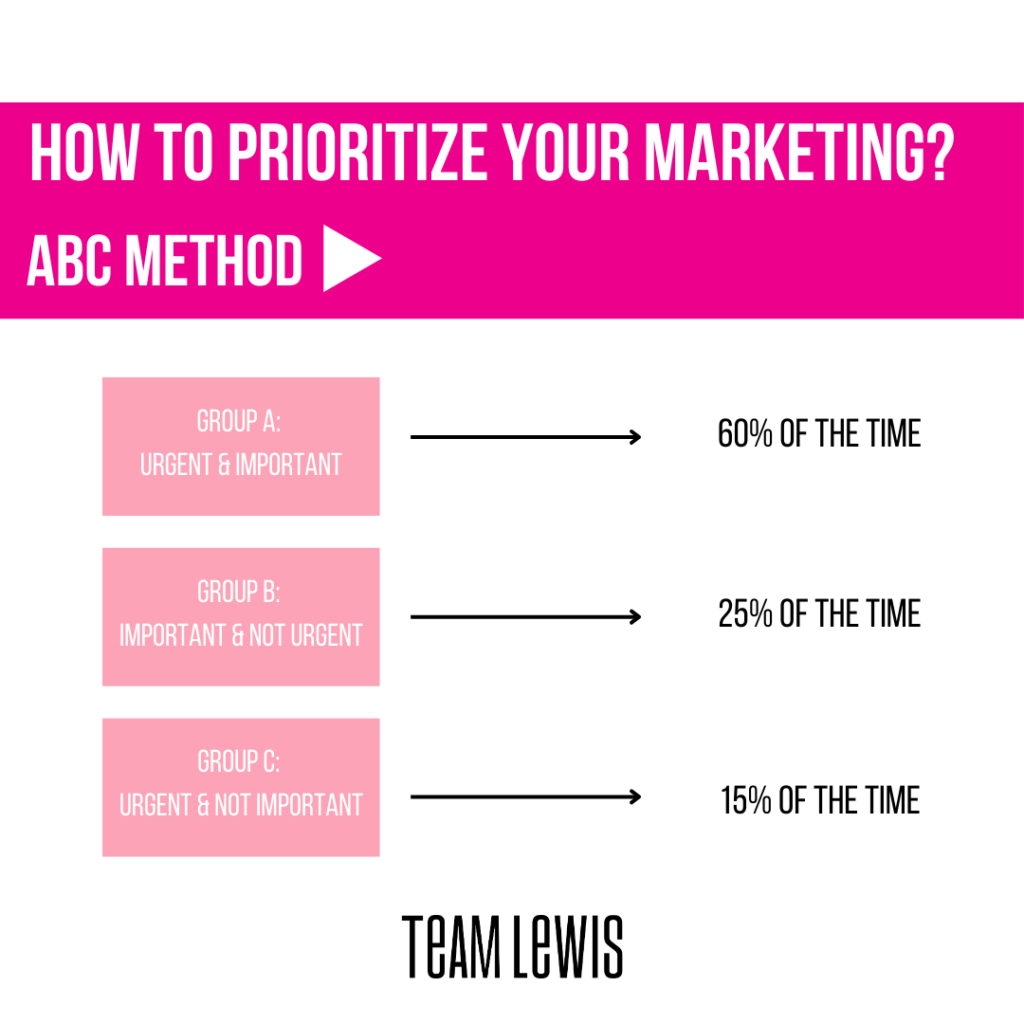
- Adopt prioritisation frameworks like the Eisenhower Matrix (urgent vs. important), the ABC Method (A: high priority, B: medium, C: low), or the RICE Scoring Model (Reach, Impact, Confidence, Effort).
- Customise these frameworks to suit your business or team needs.
- Create a marketing plan that outlines strategies, tactics, channels, and timelines to ensure a cohesive approach that aligns with your objectives and resources.
- Ultimately, a strategic approach is vital for balancing immediate needs with long-term goals in prioritising marketing projects. Leveraging digital channels and focusing on customer retention and loyalty enables marketers to create campaigns that drive sustainable growth.
4. Allocate Resources and Budget
- Determine the necessary budget and allocate resources effectively across various marketing activities to optimise return on investment.
- Engaging marketing strategic audit services adds value by revealing which channels and tactics previously delivered strong ROI, helping marketers make informed budget decisions.
- Addressing these priorities lays a solid foundation for a successful marketing campaign.
5. Monitor and Adjust
- Regularly review priorities as business needs or market conditions change.
- Use analytics to evaluate the performance of prioritised tasks and adapt as needed.
- Ensure team alignment with project management tools and clear communication.
Related content: Five Tips for End-Of-Year PR Reporting
Marketing Priority Checklist
Use this marketing checklist to ensure all essential tasks are completed for a successful marketing campaign. A comprehensive priority checklist should include a SWOT analysis, assessing the market, analysing competitors, and setting SMART goals (Specific, Measurable, Achievable, Relevant, Time-bound). Use this framework to ensure your marketing efforts are well-structured, focused, and aligned with business goals:
Preparation Phase
- Set Goals: Define SMART objectives and key performance indicators (KPIs).
- Research: Conduct SWOT analysis, audience profiling, and competitor review.
- Budgeting: Allocate funds for content, tools, and outreach.
Planning Phase
- Outline Campaign: Break into projects, create a content calendar, and assign tasks.
- Develop Messaging: Create key messages and select marketing channels.
Execution Phase
- Launch Campaign: Publish optimised content and distribute it across selected channels.
- Outreach: Engage journalists, influencers, and partners for greater visibility.
Monitoring and Optimisation Phase
- Track Performance: Use analytics tools to monitor KPIs.
- Adapt Strategies: Optimise based on real-time data and audience feedback.
Post-Campaign Phase
- Evaluate Results: Analyse performance, highlight lessons learned, and document insights.
In part two of our blog, we explore the top channels, tools and rends shaping marketing’s next moves. Read it here: