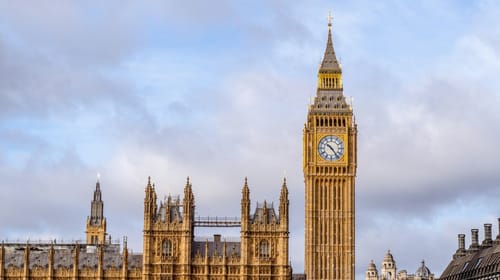
Having moved to London just four months ago after spending my entire life in California, these midterms were the first I watched from the outside looking in.
My social media algorithms still seem to think I’m in the US, serving me a flood of interview clips from both CNN and Fox News in the lead-up to the election. But TV coverage and day-to-day conversations in London are naturally more concerned with what’s happening here.
I imagine plenty of water cooler conversations in the US included, “Did you see that clip of Abdul El-Sayed?” But when I posed the same question to my UK colleagues, many didn’t know who I was talking about.
That’s understandable. When I was in the US, I can’t say I paid much attention to parliamentary elections here, so it would be crazy to expect my London colleagues to follow the midterms too closely. Even so, the results and their implications have been felt on this side of the pond and around the world.
What the US midterm results tell us
My main takeaway from this election is that, despite an increasingly divided political environment, everyone has a breaking point.
When people feel they’re being punished at the gas pump or in the grocery store for the actions of their government, it’s only a matter of time before they respond. Politics aside, every voter is a human, and their basic needs transcend party lines. For some voters, concerns about the cost of living and global conflict appear to have outweighed party allegiance.
NPR’s breakdown of voter polling shows how widely the vote shifted. Democrats won male voters for the first time since 2008, while Republicans saw their worst performance among independents since at least 1998. Democrats also won 73% of the vote among 18 to 29-year-olds in House races.
The swing among younger voters was particularly striking. To me, it speaks to how many young people feel about their opportunity to succeed in the current system. It’s also worth remembering that voter turnout differs between presidential and midterm elections, so a shift in the results doesn’t necessarily mean the same people changed their votes.
The reaction outside the US
The excitement about the midterm results among my colleagues outside the US has been palpable.
Many have felt the effects of American policies over the past few years, and the prospect of a change in direction has given them reason for optimism. I’ve seen team members in Singapore and clients in Estonia celebrating the outcome of an election in a country thousands of miles away.
A few years ago, I might have found that surprising. Now, living outside the US, I have a clearer view of just how closely American politics can be felt elsewhere. Of course, not everyone will see the result in the same way, but the reaction from the people around me has stayed with me.
What the midterms could mean for marketing
I hope some of that optimism will make its way into the marketing industry. If the election result contributes to a greater sense of stability, brands may feel more confident about investing in their future.
The past few years have been unpredictable for businesses and marketing teams. If greater consistency does follow, I think we could see more brands willing to invest in marketing again, whether that means increasing budgets or expanding into new markets.
That outlook won’t be the same for every industry. Defense spending could come under greater scrutiny if the new Congress takes a different approach to international conflicts. Data center investment in the US could also be affected if further regulation comes into view. Brands reliant on growth in those areas may take a more cautious view.
For now, much depends on what happens next. But I’m hopeful that greater confidence will give more brands the opportunity to think beyond the immediate uncertainty and invest in their next phase of growth.
If you’re looking to increase marketing investment or scale your global presence, get in touch with the team today.