Thanks to LLMs like ChatGPT, Gemini, Perplexity, or Copilot, creating content seems easier than ever. Just type a prompt like ” Hey, write a blog post about AI-generated content ” and you’ll instantly receive a completed article.
However, there’s another side to the coin: many brands believe that AI-generated text automatically improves their visibility in chatbot responses, but this isn’t the case. In this article, we explain why content written entirely by AI can be penalized by the models themselves and how to manage it effectively.

The world is washed with AI content
Every day, thousands of texts, images, and videos generated by artificial intelligence flood the web. Distinguishing what is real and what is reliable is becoming increasingly difficult , which is why it’s important to be recognizable as a credible author. Authentic content, created by real professionals, inspires trust not only in readers but also in the AI models themselves, which increasingly filter texts based on source and origin.
This is where the vEEAT principle comes into play : verified Experience, Expertise, Authoritativeness, and Trustworthiness. Although the “verification” aspect has only recently been introduced, it is becoming the most crucial one. Demonstrating the authenticity of content makes the difference. When this is then combined with expertise, authority, and credibility, your content is enhanced compared to the anonymous mass of generic outputs produced by AI.
AI needs human experience
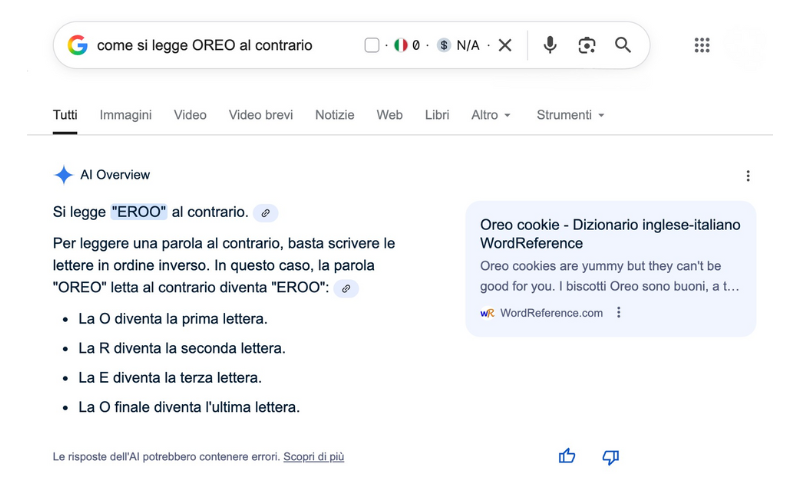
Artificial Intelligence does not generate new knowledge on its own. Without human input, it tends to repeat existing information or invent incorrect information. The result is a continuous cycle of inaccuracies and repetitions.
When AI finds information that hasn’t yet been published elsewhere, it recognizes it as human input and adds it to its own knowledge base. This is precisely why articles containing original insights or quotes from industry experts perform better. Analysis tools like Search Attention, for example, show how these human contributions “light up green” in analyses, signaling their added value.
Platforms slow down on AI content
Even the big players are drawing clear boundaries. YouTube recently decided not to monetize AI-generated videos. Creators who primarily publish AI-generated content are seeing their advertising revenue decline.
A choice that aims to counter the phenomenon of AI slop or AI junk : superficial or surreal content that invades the internet and social platforms like Instagram, YouTube or TikTok, degrading the overall quality of the user experience and demonstrating how unreliable AI outputs can be.
The message is clear: content created purely by AI is no longer rewarded. Brands and creators who invest in authentic, human-like content will always have a significant competitive advantage.
Write for people, not robots
AI can do a lot, but it can’t replace unique insights and personal perspectives. Humans are capable of capturing the right nuances, conveying empathy, emotion, and real-world experiences to enrich a story. This is precisely what makes content valuable and memorable. AI-generated content, on the other hand, often lacks depth and authenticity.
Ultimately, we don’t write for algorithms, but for people.
AI has no legal or ethical responsibility
Another critical point: AI tools assume no responsibility for incorrect or harmful information. When a text crosses legal or ethical boundaries, human intervention is always necessary. Without this level of control, there is a risk of legal complaints, reputational damage, and a loss of trust.

PR is the key to getting noticed by AI
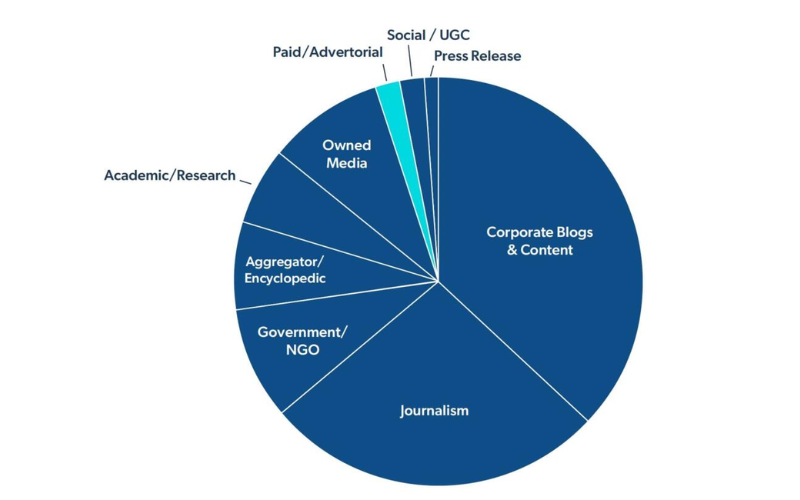
Creating quality content is the foundation of everything, but even the most carefully crafted texts need a boost to stand out in AI search. This is where PR comes in. By carefully pitching your stories to trusted media and publications, you increase the credibility of your content for AI models. In fact, a recent study by Muck Rack shows that at least 27% of AI-generated responses come from trusted journalistic sources.
Conclusion
As Artificial Intelligence continues to invade the digital landscape, the line between human- and machine-generated content becomes increasingly blurred . In this landscape, verified and reliable sources are the true differentiator. Brands and creators that invest in authenticity and proven expertise will not only attract human readers but will also be recognized as authoritative by algorithms.
AI must be seen as a complementary tool to human skills, not a replacement. The role of creators and communications professionals is to enrich AI with originality, nuance, and responsibility—qualities that no algorithm can replicate.
The future of content strategy isn’t choosing between AI and human creativity: it’s figuring out how to blend them to create content that speaks to people and is valued by algorithms.