If You Didn’t Have AI, Did You Even Exhibit?
RSAC this year made one thing unmistakably clear. AI agents are the center of gravity in cybersecurity right now. If you were not discussing AI, it was as if you didn’t exist. But alongside this, there was a noticeable gap between what many companies were claiming and what they could actually explain in plain language, especially in the short time on the show floor while waiting for some booth-side espresso.
A surprising number of booths still leaned on product buzzword stuffing, with messaging that made it hard to understand the benefit of stopping for a conversation. In too many cases, you could not tell what a company did, who it served, or why it mattered. The result is a crowded floor where “AI” becomes table stakes, but clarity becomes the real differentiator.
Visually, the bar for booth creativity was incredibly high. Those activations pulled people in and generated plenty of photos and social moments. But they also reinforced a key takeaway for companies without massive budgets: clear messaging and signage matter more than ever. If you cannot rely on spectacle, you have to win with instant comprehension. The brands that will come out ahead are the ones that give passersby a clear reason to stop, talk, and remember them after the swag is gone and the selfies on LinkedIn are buried deep in feeds.
Booths That Nailed It: Storytelling You Could Feel
Coming off the back of CES, RSAC felt noticeably different – not just in audience, but in how brands showed up.
At CES, experiences tend to be product-led. With tangible technology to demonstrate, brands can build around hands-on interactions, simulations, and real-world use cases (think smart home environments). The product does much of the work in drawing people in.
RSAC operates in a very different context. Most cybersecurity companies don’t have a physical product to showcase in the same way – which means the burden shifts to experience design. Brands have to work harder, and often more creatively, to capture attention.
And in many ways, that made RSAC feel more fun and experiential.
Some of the booths I personally enjoyed:
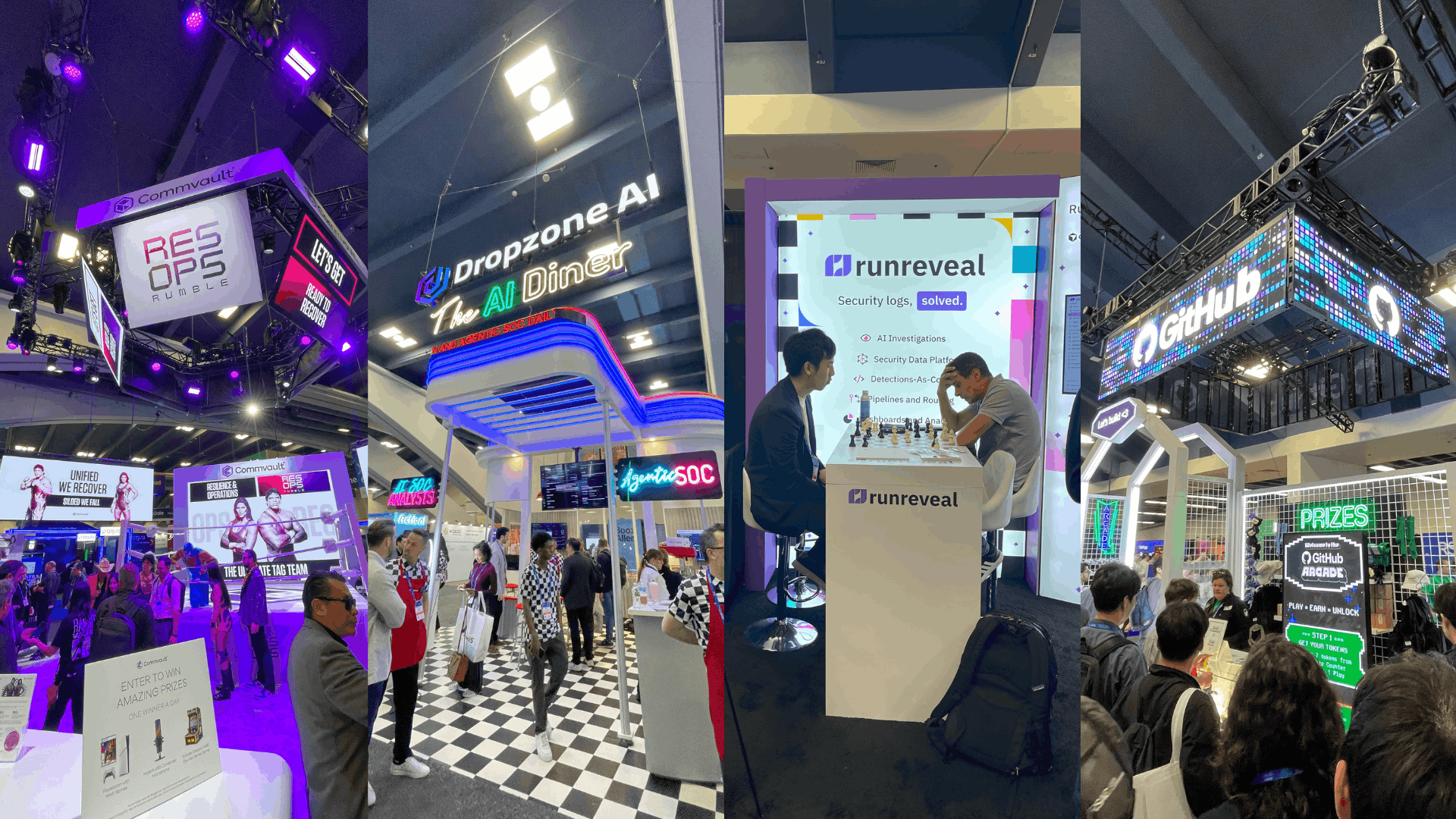
- Commvault’s “ResOps Rumble” — a full lucha libre wrestling match that brought their “ultimate tag team” narrative to life. Equal parts entertainment and brand storytelling.
- RunReveal’s “beat a chess grandmaster” challenge — a simple but effective concept rooted in their founder’s love for chess, while reinforcing the idea of anticipating threats.
- Dropzone AI’s “AI Diner” — complete with staff in diner uniforms and a robot showcase that naturally drew foot traffic.
- Gamified booths (like GitHub) that required attendees to complete activities or engage with different teams to unlock swag.
- And in contrast, Darktrace’s lounge activation — offering a place to rest, with branding present but no hard sell.
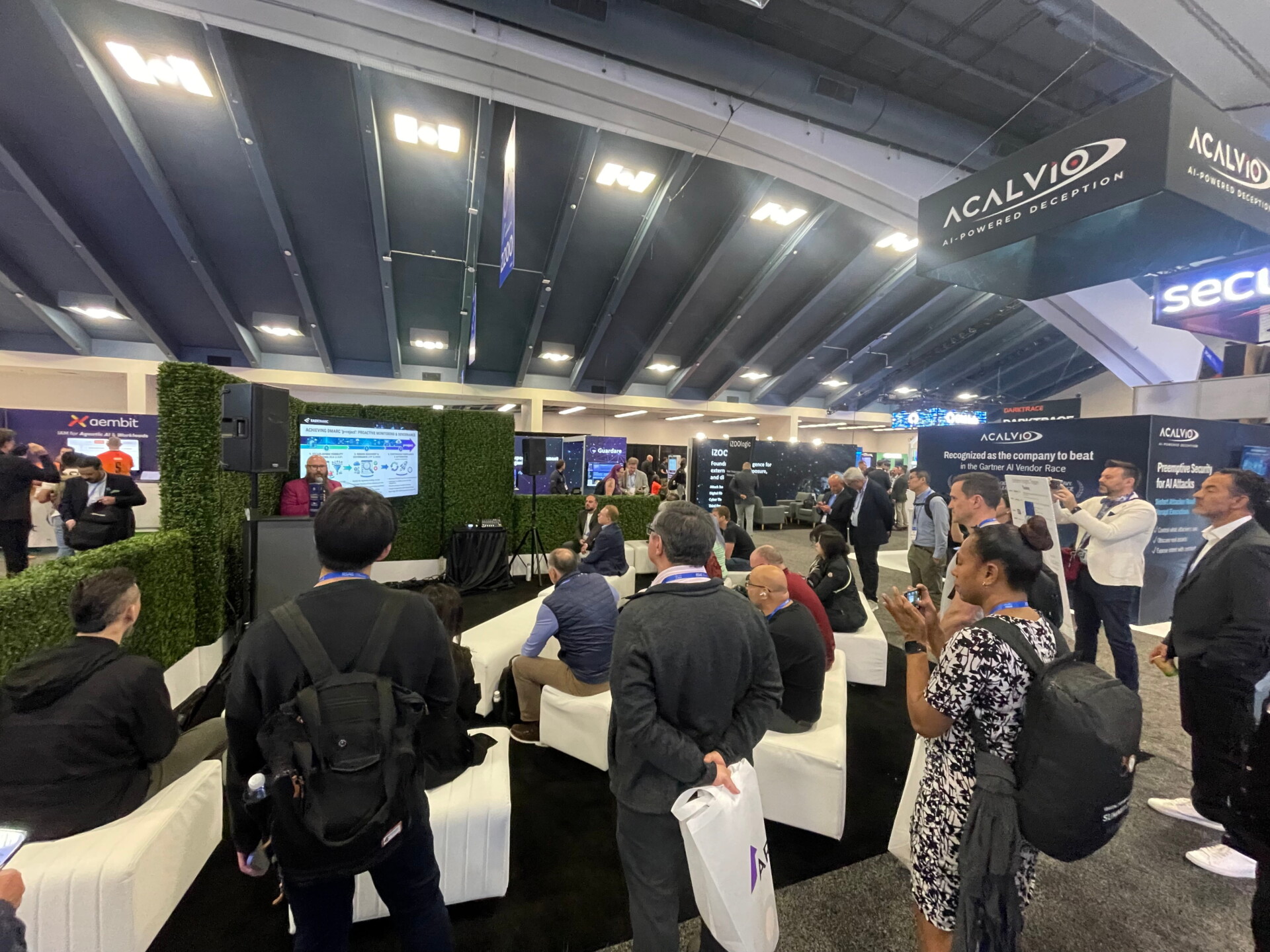
Another format that stood out was the number of booths running live presentations. These created a natural entry point – easy to walk by, listen in, and decide whether to stay or move on. The best ones struck a balance: not too technical, not too basic, but just engaging enough to earn 10–15 minutes of attention and organically build a crowd.
It’s important to remember that attendees come with different motivations – to learn, explore, collect swag, or simply take a break. The brands that stand out are the ones that understand this and design experiences around it.
That said, driving foot traffic is only the starting point.
To maximize ROI, brands need to think beyond the booth – setting up meetings with media and investors, building relationships with industry peers, and creating content that extends beyond the show floor.
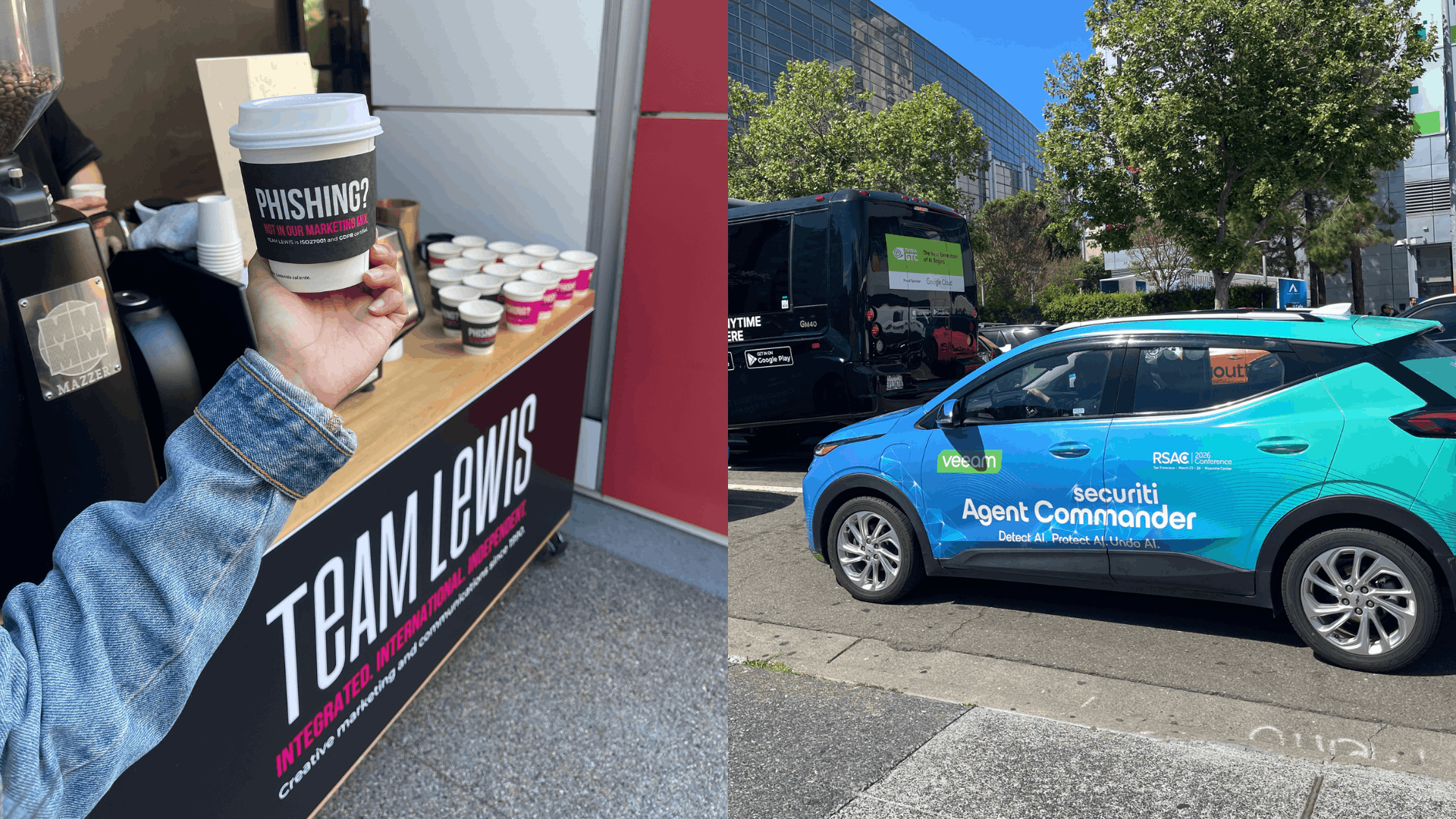
Amplification also shouldn’t stop at digital. Some of the most effective efforts extended into the physical environment – from mascots roaming the floor, to bold overhead signage with clear calls to action, to activations outside the venue. TEAM LEWIS, for example, set up a coffee stand offering free drinks, while other brands invested in out-of-home placements across the city, including cars, buses, and trucks.
Ultimately, RSAC is a reminder that when products are less visible, storytelling, creativity, and audience understanding become even more critical.
Teresa Zhou, Managing Director
Cybersecurity as Peace of Mind (Not Panic)
RSAC 2026 was full of energy, creativity, and intentionality, with a clear shift toward crafting emotional experiences rather than simply delivering information. Companies prioritized how they made attendees feel just as much as what they communicated.
Companies focused on creating a sense of ease, clarity, and confidence in their solutions through their booths. Many leaned into themes of cybersecurity as a source of peace of mind instead of fear or urgency. Vanta brought this to life with its “calm-pliance” concept. Mind AI emphasized “stress-free DLP,” while Zenity highlighted “purpose-built Zen” as a key phrase. Together, these approaches point to a broader effort to humanize cybersecurity and position it as something that simplifies and supports rather than overwhelms.
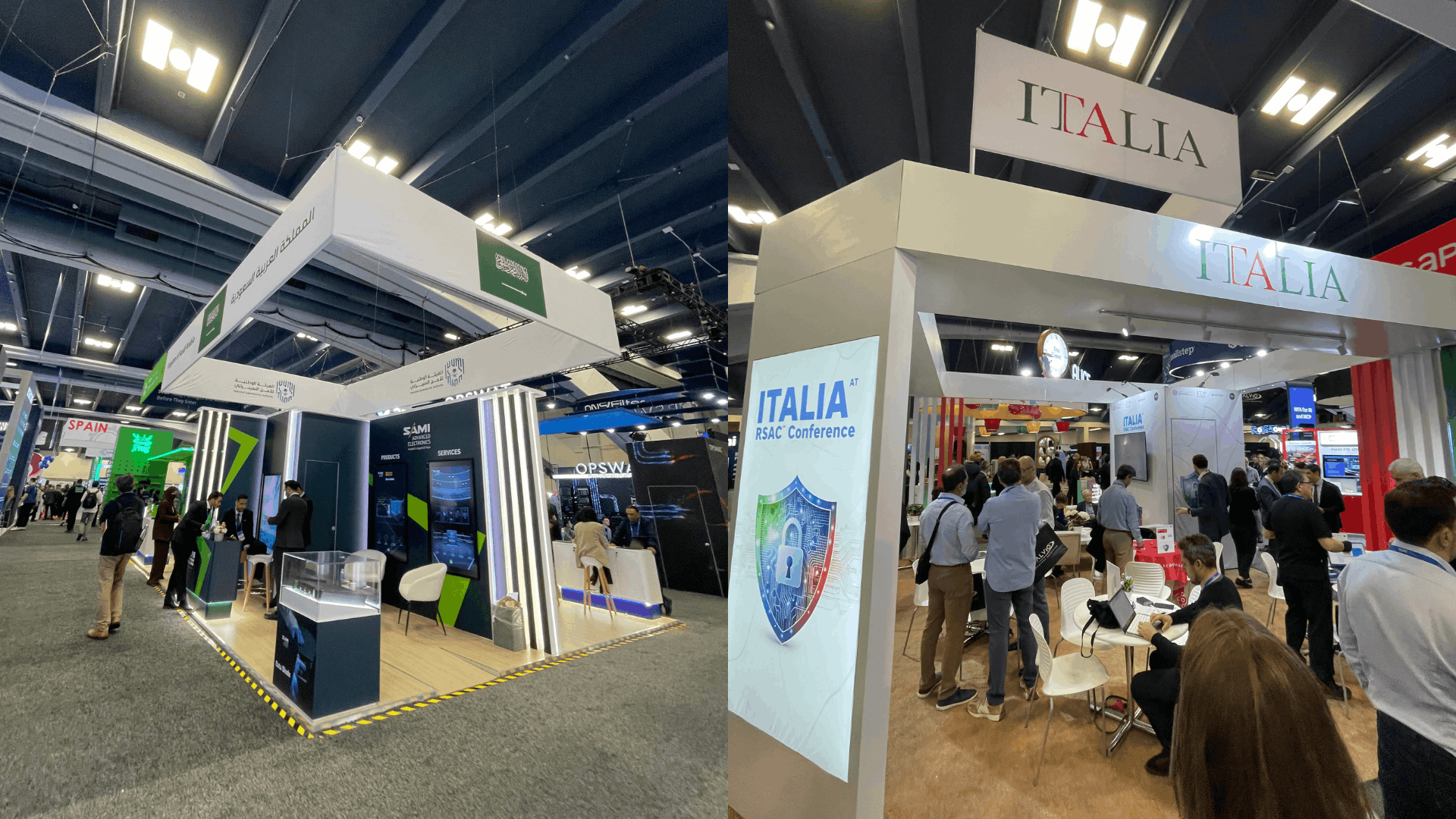
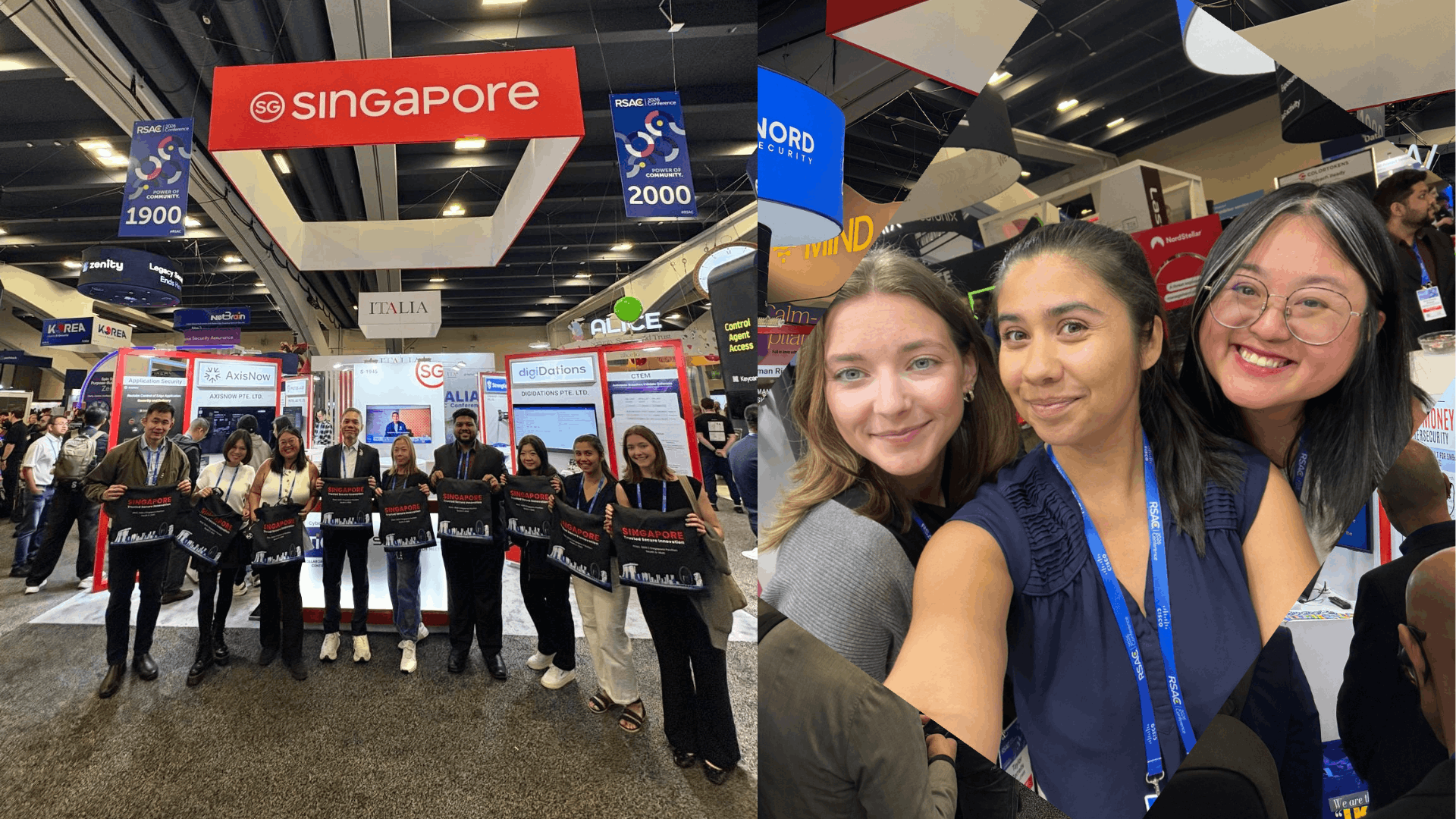
The overarching theme of the event was unmistakably AI in all its forms. Nearly every cybersecurity company present showcased AI as a core part of its latest products or solutions. One attendee even remarked that it felt similar to the year “next-gen” became prevalent, when you couldn’t walk the floor without seeing the term everywhere. There was also a strong international presence, with pavilions from the Netherlands, Italy, Spain, Saudi Arabia, and Singapore. Each highlighted the innovation coming out of its region and reinforced how global the evolution of the industry has become.
Taylor Gerrells, Senior Campaign Executive